
Overview of Residential & Commercial EV Charger Installation in Wallingford, Connecticut
Reliable electrical infrastructure is essential for the comfort, operational productivity, and physical safety of properties across Wallingford. Electrical systems are subject to constant thermal expansion, mechanical vibration, oxidation, and expanding consumer amperage loads. Whether you own an established historic property, a modern suburban residence, or an active commercial enterprise in Wallingford, addressing electrical needs through qualified, licensed professionals ensures compliance with strict municipal building codes and national safety standards.
Wallingford's municipal electric utility offers competitive energy rates, driving high demand for residential electric heating, heat pump conversions, Level 2 EV charging, and high-capacity panel upgrades, alongside substantial commercial development along Route 5 and I-91.
Charging an electric vehicle at home with a Level 2 charging station increases charging speeds by up to 5 to 7 times compared to standard 120-volt trickle charging. Level 2 chargers draw continuous electrical loads (typically 32 to 48 continuous amperes). Under NEC Article 625, EV charging is classified as a continuous load, requiring conductors and circuit breakers to be rated at 125% of the charger's maximum current output (e.g., a 48A charger requires a dedicated 60A breaker). An electrical contractor must evaluate your service panel to ensure sufficient capacity before adding this substantial continuous load.
Key Technical Priorities & Scope of Work
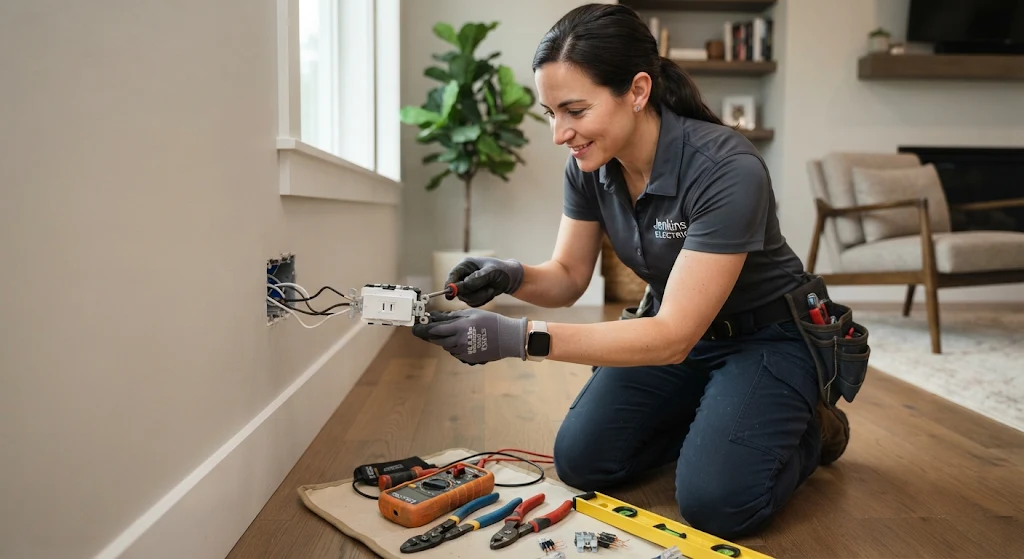
When an independent electrical contractor evaluates your property in Wallingford for EV Charger Installation, their primary objective is delivering long-term electrical safety, operational reliability, and code compliance. Key technical priorities addressed during service include:
- Dedicated 240-volt 40A to 60A branch circuit wiring and conduit runs
- Hardwired charging station installation vs. NEMA 14-50 receptacle installation
- Residential service panel load calculation under NEC Article 220
- Smart energy management systems and dynamic EV load balancing
- Commercial multi-unit and fleet EVSE pedestal installations
Common Customer Situations & Warning Signs
Electrical issues rarely emerge without early warning indicators. Recognizing these signs allows property owners in Wallingford to seek professional evaluation before small electrical faults escalate into major power interruptions, equipment failure, or hazardous structural fires:
- Purchasing or leasing a battery electric vehicle (BEV) or plug-in hybrid (PHEV)
- Standard 120V Level 1 charging taking 24 to 40 hours for a full vehicle recharge
- Service breaker panel lacking spare breaker spaces for a dedicated 240V double-pole breaker
- Commercial business or multi-family property seeking tenant amenity EV charging
- Desire to take advantage of utility off-peak EV charging rate incentives in Connecticut
Factors Affecting Project Scope & Complexity
Every electrical installation or remediation project in Wallingford presents unique variables. Independent electrical contractors conduct comprehensive on-site assessments to evaluate:
- Distance and conduit routing complexity between the main panel and the charging location
- Existing panel reserve capacity and need for an NEC load calculation
- Choice between a hardwired station (allowing up to 48A/60A circuit) or a plug-in NEMA 14-50 outlet
- Need for GFCI breaker protection on receptacle-fed installations under recent code cycles
- Municipal trade permitting and utility incentive documentation
Permitting & Code Compliance in Wallingford
Wallingford features an important jurisdictional distinction: the municipal Wallingford Building Department administers building and electrical trade permits and code inspections, while the municipal Wallingford Electric Division operates the public power utility grid. Contractors coordinate with the Electric Division for meter disconnects and service taps, and with the Building Department for permit sign-offs.
In Connecticut, licensed E-1 electrical contractors are responsible for pulling all required trade permits, coordinating with local electrical inspectors, and securing final approvals. Attempting to bypass the permitting process can void property insurance coverage, create hidden safety hazards, and complicate future real estate transactions. Independent contractors in our referral network navigate the municipal permitting process to ensure all work receives official inspection sign-offs.
Need a Qualified Electrician in
Speak directly with independent licensed electrical contractors serving Wallingford and surrounding Connecticut communities. Receive prompt project evaluations, transparent estimates, and code-compliant service.
Call (888) 605-9975 to ConnectWhat to Expect from Independent Contractors via WATT911
WATT911 operates as an independent lead-generation and referral directory. When you contact our network, your request is routed to participating independent electrical contractors who service Wallingford. You can expect:
- Direct Contractor Communication: You speak directly with the independent contractor's team to discuss your project scope, scheduling, and diagnostic assessment.
- Thorough On-Site Assessment: The contractor inspects your existing electrical panel, branch wiring, grounding system, and connected equipment to formulate a tailored solution.
- Written Estimates & Scope: You receive an itemized proposal detailing labor, equipment, permit fees, and materials before authorizing any electrical work.
- Independent Accountability: All contracts, guarantees, warranties, and billing are handled directly between you and the independent contractor.
Related Electrical Services in Wallingford
Explore other approved electrical service landing pages for Wallingford in the WATT911 Connecticut directory:
Frequently Asked Questions: Residential & Commercial EV Charger Installation in Wallingford
It depends on your current service capacity and existing household electrical loads. Many 200-amp panels have sufficient headroom. Homes with 100-amp services may require an NEC load calculation to determine if capacity exists, or if a service upgrade or a smart energy management load-shedding device is necessary.
Hardwiring is generally preferred for maximum charging performance and reliability. Hardwired units can deliver up to 48 amps (on a 60A breaker), whereas plug-in units are limited to 40 amps (on a 50A breaker). Additionally, recent NEC updates require GFCI breakers on 240V receptacles, which can sometimes nuisance-trip with EV chargers that feature built-in ground-fault testing.
A Level 2 (240V) charger typically delivers between 25 to 45 miles of driving range per hour of charging, fully recharging most passenger electric vehicles in 4 to 8 hours (usually overnight), compared to 120V Level 1 chargers which provide only 3 to 5 miles of range per hour.
Yes. Installing a new 240-volt high-amperage dedicated circuit requires an electrical permit from the local building department in Wallingford to verify proper wire gauge, conduit protection, overcurrent protection, and grounding safety.
Yes. Most Level 2 charging stations carry NEMA 3R or NEMA 4 weather-resistant ratings designed for year-round outdoor operation in Connecticut winter conditions. For detached garages, an electrician can evaluate existing subpanels or trench underground conduit.