
Overview of Industrial Electrical Systems & Manufacturing Infrastructure in Danbury, Connecticut
Reliable electrical infrastructure is essential for the comfort, operational productivity, and physical safety of properties across Danbury. Electrical systems are subject to constant thermal expansion, mechanical vibration, oxidation, and expanding consumer amperage loads. Whether you own an established historic property, a modern suburban residence, or an active commercial enterprise in Danbury, addressing electrical needs through qualified, licensed professionals ensures compliance with strict municipal building codes and national safety standards.
Danbury anchors northern Fairfield County, balancing vibrant corporate office parks, medical technology complexes near Danbury Hospital, and established residential neighborhoods surrounding Candlewood Lake. Power reliability demands both residential standby generators and heavy industrial 480V three-phase electrical systems.
Industrial electrical contracting demands advanced specialized engineering knowledge beyond standard commercial and residential work. Industrial plants operate complex inductive motor loads, high-voltage switchgear, variable frequency drives (VFDs), programmable logic controllers (PLCs), and hazardous location classifications (dust, chemical vapors, and moisture). In Connecticut's manufacturing sectors, qualified industrial electrical specialists design and maintain heavy infrastructure under strict adherence to NFPA 70E electrical workplace safety standards and IEEE engineering guidelines.
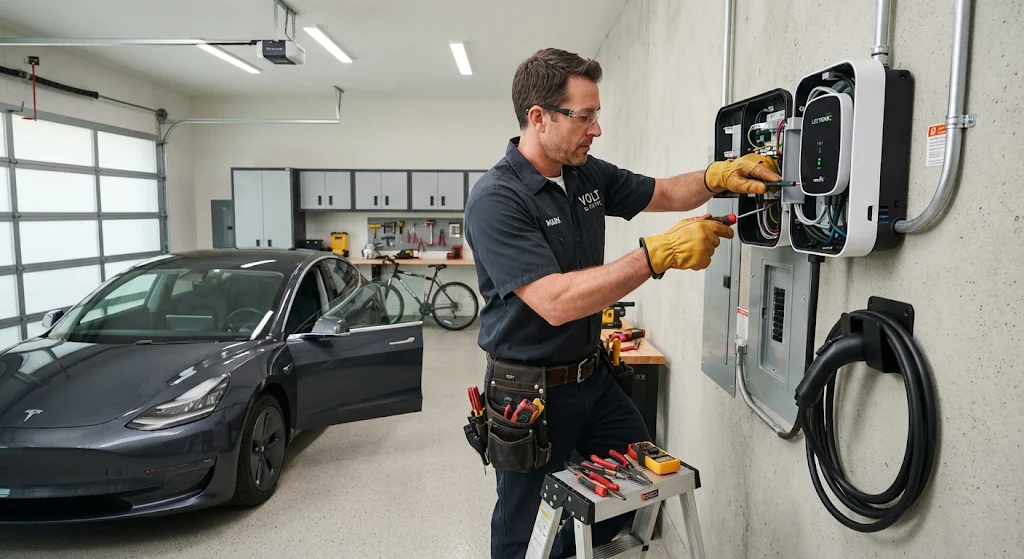
Key Technical Priorities & Scope of Work
When an independent electrical contractor evaluates your property in Danbury for Industrial Electrician, their primary objective is delivering long-term electrical safety, operational reliability, and code compliance. Key technical priorities addressed during service include:
- High-voltage and 480V three-phase heavy distribution switchgear and transformers
- Motor Control Center (MCC) installation, variable frequency drives (VFD), and soft starters
- Industrial machinery power drops, rigid conduit piping, and busway installations
- Hazardous location wiring (Class I, II, III, Division 1 & 2 classified environments)
- Arc flash hazard analysis, thermal imaging surveys, and preventive maintenance
Common Customer Situations & Warning Signs
Electrical issues rarely emerge without early warning indicators. Recognizing these signs allows property owners in Danbury to seek professional evaluation before small electrical faults escalate into major power interruptions, equipment failure, or hazardous structural fires:
- Manufacturing production facility installing new CNC equipment, robotics, or industrial machinery
- Transformer overheating, harmonic distortion, or frequent motor starter overloads
- Industrial plant expansion requiring substations, switchgear upgrades, or power factor correction
- Mandatory compliance audits for NFPA 70E arc flash safety and OSHA industrial standards
- Facility experiencing unanticipated production downtime due to electrical distribution failure
Factors Affecting Project Scope & Complexity
Every electrical installation or remediation project in Danbury presents unique variables. Independent electrical contractors conduct comprehensive on-site assessments to evaluate:
- Operating voltages, short-circuit current ratings (SCCR), and transformer step-down requirements
- Environmental classification (explosion-proof fittings, corrosion-resistant stainless or PVC conduit)
- Safety lock-out/tag-out (LOTO) procedures and plant-specific safety orientation protocols
- Power quality monitoring, harmonic mitigation, and power factor correction capacitors
- Comprehensive arc flash boundary labeling and coordination studies
Permitting & Code Compliance in Danbury
Administered by the City of Danbury Building Department and designated municipal Electrical Inspectors. Trade permits require licensed contractor verification, circuit load documentation, and scheduled on-site compliance inspections.
In Connecticut, licensed E-1 electrical contractors are responsible for pulling all required trade permits, coordinating with local electrical inspectors, and securing final approvals. Attempting to bypass the permitting process can void property insurance coverage, create hidden safety hazards, and complicate future real estate transactions. Independent contractors in our referral network navigate the municipal permitting process to ensure all work receives official inspection sign-offs.
Need a Qualified Electrician in
Speak directly with independent licensed electrical contractors serving Danbury and surrounding Connecticut communities. Receive prompt project evaluations, transparent estimates, and code-compliant service.
Call (888) 605-9975 to ConnectWhat to Expect from Independent Contractors via WATT911
WATT911 operates as an independent lead-generation and referral directory. When you contact our network, your request is routed to participating independent electrical contractors who service Danbury. You can expect:
- Direct Contractor Communication: You speak directly with the independent contractor's team to discuss your project scope, scheduling, and diagnostic assessment.
- Thorough On-Site Assessment: The contractor inspects your existing electrical panel, branch wiring, grounding system, and connected equipment to formulate a tailored solution.
- Written Estimates & Scope: You receive an itemized proposal detailing labor, equipment, permit fees, and materials before authorizing any electrical work.
- Independent Accountability: All contracts, guarantees, warranties, and billing are handled directly between you and the independent contractor.
Related Electrical Services in Danbury
Explore other approved electrical service landing pages for Danbury in the WATT911 Connecticut directory:
Frequently Asked Questions: Industrial Electrical Systems & Manufacturing Infrastructure in Danbury
While commercial work centers on retail, offices, and life safety lighting, industrial electrical engineering focuses on high-amperage 480V to medium-voltage power distribution, heavy machinery, motor control centers (MCC), industrial automation, harmonic filtering, and hazardous location classifications with rigid steel conduit.
An arc flash study evaluates electrical distribution systems to determine incident energy levels at various electrical panels and switchgear. This analysis establishes safe approach boundaries and mandatory Personal Protective Equipment (PPE) categories for personnel under NFPA 70E and OSHA regulations.
VFDs regulate the rotational speed and torque of industrial electric motors by modulating frequency and voltage. This drastically reduces inrush current during startup, lowers energy consumption on pumps and fans, and prolongs mechanical equipment longevity.
Hazardous environments containing flammable gases, vapors, or combustible dust (Class I, II, or III) require specialized explosion-proof conduit seals, heavy-wall threaded rigid metal conduit, and intrinsically safe apparatus under NEC Articles 500-516 to eliminate ignition sources.
Yes. Specialists conduct non-destructive infrared thermographic imaging, ultrasonic inspections, transformer oil dielectric testing, and breaker trip-timing tests to detect developing electrical resistance and prevent catastrophic equipment failure.