
Overview of Electrical Panel Upgrades & Service Modernization in Milford, Connecticut
Reliable electrical infrastructure is essential for the comfort, operational productivity, and physical safety of properties across Milford. Electrical systems are subject to constant thermal expansion, mechanical vibration, oxidation, and expanding consumer amperage loads. Whether you own an established historic property, a modern suburban residence, or an active commercial enterprise in Milford, addressing electrical needs through qualified, licensed professionals ensures compliance with strict municipal building codes and national safety standards.
With extensive Long Island Sound shoreline, Milford features historic coastal cottages, expansive retail corridors along the Boston Post Road, and modern residential developments. Coastal weather conditions demand weather-tight NEMA 3R/4X rated outdoor panels, whole-house surge suppression, and dedicated EV charging circuits.
Upgrading an electrical service involves far more than simply swapping the metal breaker box. A true service capacity upgrade requires evaluating the utility service entrance conductors, the exterior meter enclosure, grounding electrode conductor systems (including ground rods and water pipe bonding), and the main service disconnect. In Connecticut, all service upgrades necessitate formal trade permits, utility coordination (such as Eversource or United Illuminating, or municipal utilities like Wallingford Electric Division and Norwich Public Utilities), and rigorous municipal building inspections before utility re-energization.
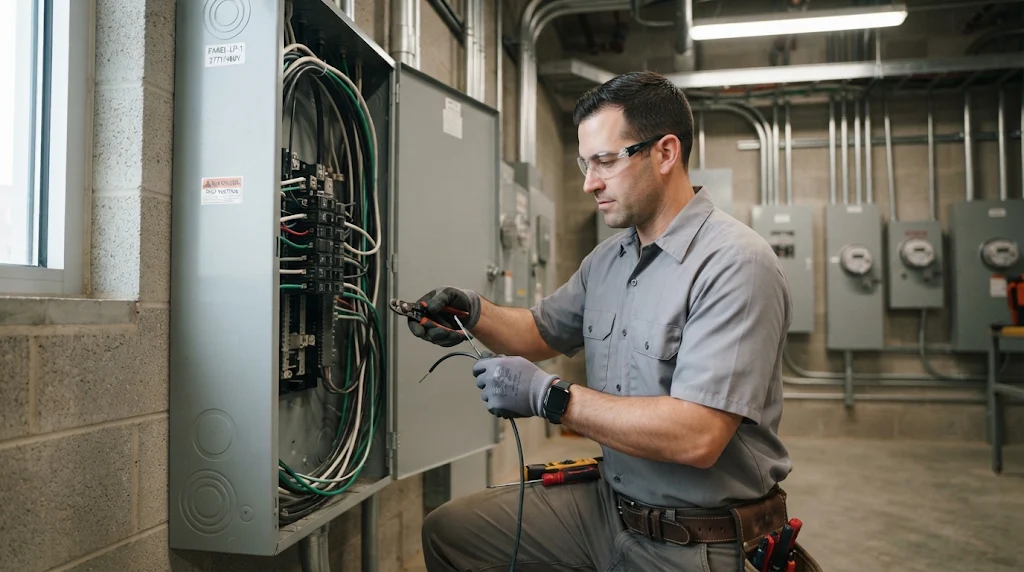
Key Technical Priorities & Scope of Work
When an independent electrical contractor evaluates your property in Milford for Panel Upgrades, their primary objective is delivering long-term electrical safety, operational reliability, and code compliance. Key technical priorities addressed during service include:
- Service capacity expansion from 100A to 200A or 400A heavy-up services
- Decommissioning obsolete fuse boxes, Federal Pacific Electric, or Zinsco panels
- Whole-home Type 1 and Type 2 surge protective device (SPD) installation
- Subpanel installation for home additions, detached workshops, and finished basements
- Utility meter base, service riser mast, and weatherhead replacements
Common Customer Situations & Warning Signs
Electrical issues rarely emerge without early warning indicators. Recognizing these signs allows property owners in Milford to seek professional evaluation before small electrical faults escalate into major power interruptions, equipment failure, or hazardous structural fires:
- Service panel remains restricted to 60-amp or 100-amp capacity while modern electrical demands grow
- Fuses continuously blow or tandem breakers are doubled up on overcrowded bus bars
- Panel interior shows evidence of rust, moisture intrusion, oxidation, or scorched bus stabs
- Planning major electrical additions such as EV chargers, central heat pumps, or hot tubs
- Property still utilizes obsolete electrical brands like Federal Pacific Stab-Lok or Zinsco panels
Factors Affecting Project Scope & Complexity
Every electrical installation or remediation project in Milford presents unique variables. Independent electrical contractors conduct comprehensive on-site assessments to evaluate:
- Whether utility overhead service drops or underground lateral conductors require replacement
- Condition and rating of the exterior meter socket and conduit riser mast
- Upgrading the grounding electrode system to dual driven copper ground rods and cold-water bonding
- Whole-structure load calculation under NEC Article 220 to determine accurate amperage needs
- Physical space constraints and clearance compliance around the panel location
Permitting & Code Compliance in Milford
Milford Department of Permitting and Land Use provides official trade guidelines for electrical work, EV charging stations, and standby power. Compliance with coastal flood-zone elevation requirements is strictly enforced for outdoor equipment.
In Connecticut, licensed E-1 electrical contractors are responsible for pulling all required trade permits, coordinating with local electrical inspectors, and securing final approvals. Attempting to bypass the permitting process can void property insurance coverage, create hidden safety hazards, and complicate future real estate transactions. Independent contractors in our referral network navigate the municipal permitting process to ensure all work receives official inspection sign-offs.
Need a Qualified Electrician in
Speak directly with independent licensed electrical contractors serving Milford and surrounding Connecticut communities. Receive prompt project evaluations, transparent estimates, and code-compliant service.
Call (888) 605-9975 to ConnectWhat to Expect from Independent Contractors via WATT911
WATT911 operates as an independent lead-generation and referral directory. When you contact our network, your request is routed to participating independent electrical contractors who service Milford. You can expect:
- Direct Contractor Communication: You speak directly with the independent contractor's team to discuss your project scope, scheduling, and diagnostic assessment.
- Thorough On-Site Assessment: The contractor inspects your existing electrical panel, branch wiring, grounding system, and connected equipment to formulate a tailored solution.
- Written Estimates & Scope: You receive an itemized proposal detailing labor, equipment, permit fees, and materials before authorizing any electrical work.
- Independent Accountability: All contracts, guarantees, warranties, and billing are handled directly between you and the independent contractor.
Related Electrical Services in Milford
Explore other approved electrical service landing pages for Milford in the WATT911 Connecticut directory:
Frequently Asked Questions: Electrical Panel Upgrades & Service Modernization in Milford
If your existing main breaker is rated for 100 amps or less, if your panel has no remaining open breaker slots, or if you plan to install modern high-draw electrical equipment like an EV charger, heat pump heating system, induction range, or central air conditioning, a 200-amp service upgrade is typically recommended. An independent contractor will perform an NEC load calculation to determine your home's peak electrical demand.
Replacing a panel means installing a new breaker box with modern safety features while maintaining your existing amperage (e.g., swapping a damaged 100A panel for a new 100A panel). A service capacity upgrade expands the actual amount of electricity delivered to your property—typically increasing service from 100A to 200A or 400A—which requires new utility meter equipment, larger entrance conductors, and utility company coordination.
Extensive independent forensic testing has demonstrated that certain vintage breaker brands, particularly Federal Pacific Electric (FPE) Stab-Lok and Zinsco panels, have high failure rates where circuit breakers fail to trip during overcurrent or short-circuit events. This failure to disconnect can cause conductors to overheat and ignite house fires. Most insurance carriers and licensed electricians recommend immediate replacement.
The physical work of replacing an electrical panel and service entrance typically takes one full day (approximately 6 to 8 hours), during which power to the home is temporarily disconnected. The project also involves advance permitting, scheduling utility meter disconnection and reconnection, and final municipal inspection sign-offs.
Yes. Recent editions of the National Electrical Code (NEC Article 242) adopted under Connecticut building regulations require a listed Type 1 or Type 2 Surge Protective Device (SPD) to be installed as an integral part of or immediately adjacent to all new residential service panels.