
Overview of Whole-Home & Partial Electrical Rewiring in Greenwich, Connecticut
Reliable electrical infrastructure is essential for the comfort, operational productivity, and physical safety of properties across Greenwich. Electrical systems are subject to constant thermal expansion, mechanical vibration, oxidation, and expanding consumer amperage loads. Whether you own an established historic property, a modern suburban residence, or an active commercial enterprise in Greenwich, addressing electrical needs through qualified, licensed professionals ensures compliance with strict municipal building codes and national safety standards.
Greenwich is renowned for expansive coastal estates, prestigious corporate headquarters, and high-demand residential systems in Belle Haven, backcountry Greenwich, and Old Greenwich. Electrical demands require high-amperage 400A to 800A services, smart automated load controllers, comprehensive standby generator systems, and multi-vehicle Level 2 EV charging arrays.
Connecticut is home to some of the nation's most historic residential architecture, with thousands of properties constructed before the 1960s. Knob-and-tube wiring, while historically sound when installed, was engineered for modest lighting loads and lacks an equipment grounding conductor. Crucially, modern thermal insulation (fiberglass or cellulose) packed around knob-and-tube wiring prevents natural convective cooling, creating severe fire hazards. Rewiring requires experienced contractors skilled in surgical wall-fishing techniques to minimize cosmetic plaster and drywall restoration.
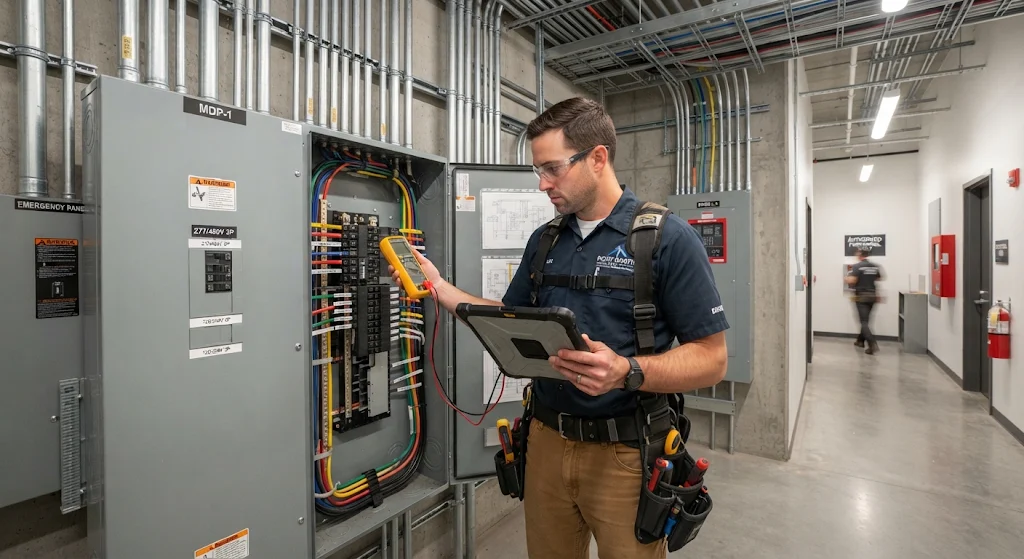
Key Technical Priorities & Scope of Work
When an independent electrical contractor evaluates your property in Greenwich for Electrical Rewiring, their primary objective is delivering long-term electrical safety, operational reliability, and code compliance. Key technical priorities addressed during service include:
- Systematic knob-and-tube (K&T) wire decommissioning and remediation
- Replacement of ungrounded two-wire cloth-insulated conductors
- Installation of modern non-metallic sheathed cable (NM-B copper Romex)
- Dedicated circuit additions for kitchens, bathrooms, laundry, and home offices
- Low-impact drywall penetration, structured wire fishing, and conduit installation
Common Customer Situations & Warning Signs
Electrical issues rarely emerge without early warning indicators. Recognizing these signs allows property owners in Greenwich to seek professional evaluation before small electrical faults escalate into major power interruptions, equipment failure, or hazardous structural fires:
- Visible porcelain knobs and ceramic tubes running through unfinished attic or basement joists
- Two-prong ungrounded receptacles installed throughout living spaces and bedrooms
- Cloth wire insulation that feels brittle, dry, cracked, or flaking away from bare copper
- Flickering lights or intermittent power loss caused by loose legacy friction-tape splices
- Homeowners insurance carrier requiring proof of knob-and-tube remediation prior to coverage
Factors Affecting Project Scope & Complexity
Every electrical installation or remediation project in Greenwich presents unique variables. Independent electrical contractors conduct comprehensive on-site assessments to evaluate:
- Total finished square footage and multi-story architecture of the residence
- Wall construction materials (traditional wood lath and horsehair plaster vs. modern gypsum drywall)
- Unfinished basement, crawlspace, and attic accessibility for routing new home runs
- Whether partial remediation of ungrounded circuits or complete whole-house rewiring is warranted
- Required permits, rough-in open-wall inspections, and final device testing
Permitting & Code Compliance in Greenwich
The Greenwich Building Division enforces rigorous electrical permitting standards. Notably, Greenwich municipal regulations require professional engineer (PE) sealed electrical load calculations for all residential and commercial services exceeding 400 amperes.
In Connecticut, licensed E-1 electrical contractors are responsible for pulling all required trade permits, coordinating with local electrical inspectors, and securing final approvals. Attempting to bypass the permitting process can void property insurance coverage, create hidden safety hazards, and complicate future real estate transactions. Independent contractors in our referral network navigate the municipal permitting process to ensure all work receives official inspection sign-offs.
Need a Qualified Electrician in
Speak directly with independent licensed electrical contractors serving Greenwich and surrounding Connecticut communities. Receive prompt project evaluations, transparent estimates, and code-compliant service.
Call (888) 605-9975 to ConnectWhat to Expect from Independent Contractors via WATT911
WATT911 operates as an independent lead-generation and referral directory. When you contact our network, your request is routed to participating independent electrical contractors who service Greenwich. You can expect:
- Direct Contractor Communication: You speak directly with the independent contractor's team to discuss your project scope, scheduling, and diagnostic assessment.
- Thorough On-Site Assessment: The contractor inspects your existing electrical panel, branch wiring, grounding system, and connected equipment to formulate a tailored solution.
- Written Estimates & Scope: You receive an itemized proposal detailing labor, equipment, permit fees, and materials before authorizing any electrical work.
- Independent Accountability: All contracts, guarantees, warranties, and billing are handled directly between you and the independent contractor.
Related Electrical Services in Greenwich
Explore other approved electrical service landing pages for Greenwich in the WATT911 Connecticut directory:
Frequently Asked Questions: Whole-Home & Partial Electrical Rewiring in Greenwich
No. The National Electrical Code strictly prohibits thermal insulation from coming into direct contact with knob-and-tube wiring. Knob-and-tube conductors rely on open air dissipation to shed heat. If covered in insulation, heat builds up rapidly, creating a severe fire hazard. Active wiring must be replaced before insulation can be added.
Skilled electrical contractors use specialized flexible auger drill bits, fiberglass fish rods, and borescope cameras to route modern NM-B cables through hollow stud bays and floor joists. Small, targeted cutouts (often only 2 to 3 inches) are made near baseboards or ceilings, drastically minimizing plaster and drywall repair.
Ungrounded cloth-sheathed cables lack an equipment grounding conductor, meaning modern appliances with metal chassis cannot safely discharge fault currents, increasing electrical shock hazards. Additionally, the rubber and cotton-cloth jacket deteriorates and turns brittle over decades of thermal cycles, exposing bare conductors to short circuits.
Depending on the square footage, layout, and wall composition, whole-house rewiring typically takes between 4 to 10 working days. Experienced contractors structure the work in phases so that essential circuits remain powered overnight whenever possible.
Yes. Rewiring replaces obsolete 14-gauge lighting circuits with properly sized modern 12-gauge and 14-gauge branch circuits, establishing dedicated 20-amp lines for high-demand kitchen small appliances, bathroom heaters, and home offices to prevent circuit overloads.